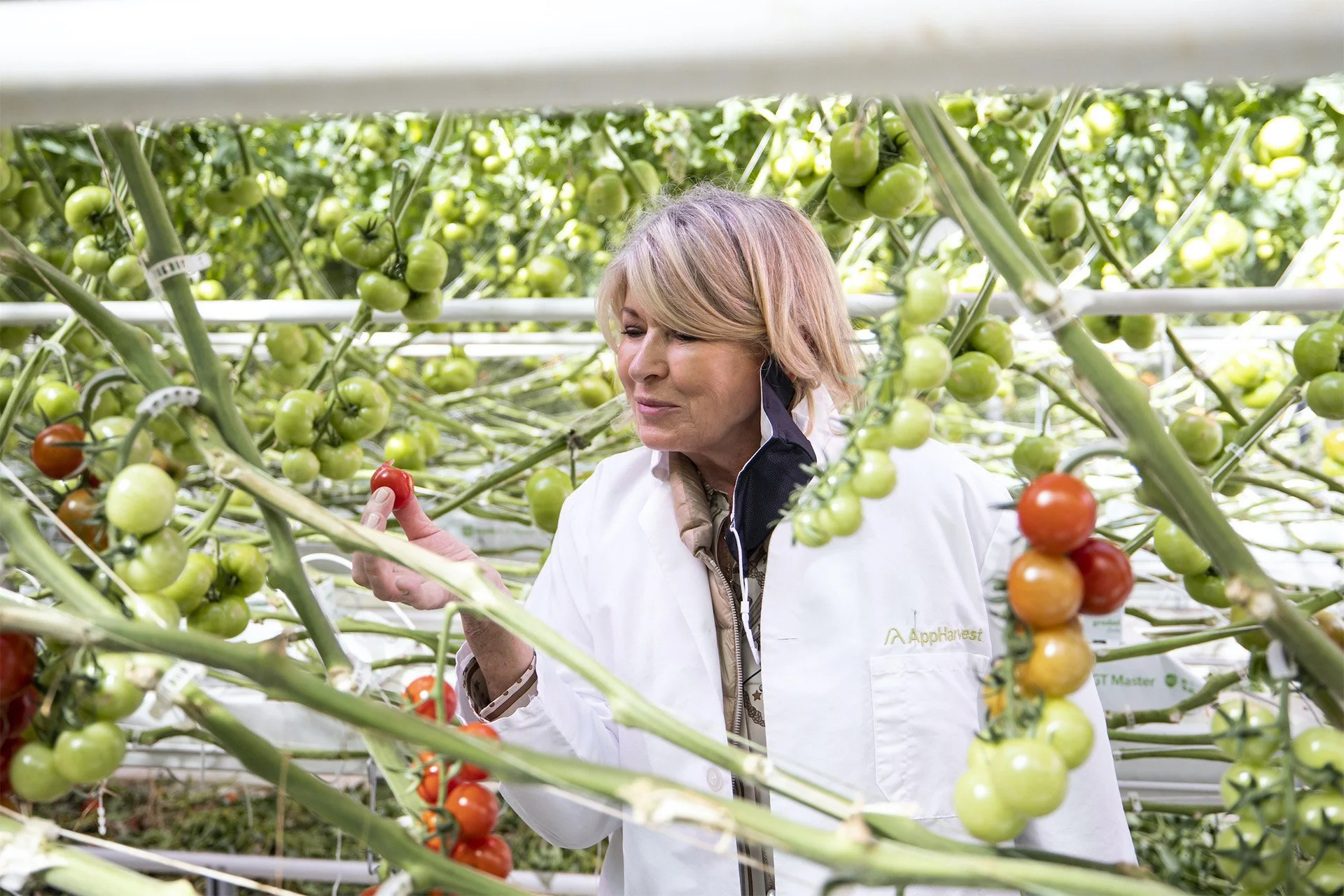
Guiding an Ag-Tech Pioneer in Appalachia
The collapse of the coal industry decimated Central Appalachia, abandoning entire generations and leaving a profound economic vacuum in its wake. AppHarvest sought to transition a displaced workforce into the high-tech agricultural sector, transforming the narrative of regional decline into one of renewal by anchoring some of the world's largest indoor farms in the heart of Eastern Kentucky.
Beyond produce production, the initiative targeted deep-seated social inequities by addressing food insecurity and systemic poverty through living-wage jobs in a historic food desert. By leveraging sustainable infrastructure and practices, they aimed to empower a marginalized community with local investment and stable, future-proof employment that honored the region's hardworking legacy.
AppHarvest
AppHarvest is one of the largest controlled-environment agriculture (CEA) projects in the United States, with roughly 3 million square feet of high-tech greenhouse space and a flagship 60-acre indoor farm in Morehead, Kentucky focused on tomato production. Founded in 2018 by Jonathan Webb, the company set out to revolutionize produce supply using advanced greenhouse technology, rainwater collection, and robotics to grow fruits and vegetables closer to major markets while creating jobs in Central Appalachia.
Despite achieving a valuation above $1B and going public via a SPAC on NASDAQ in February 2021 under the ticker APPH, AppHarvest later faced operational and financial challenges that led to a Chapter 11 bankruptcy filing in 2023; its greenhouses were subsequently sold to new owners who have kept the facilities operating and employing roughly 1,000 people.

Scope: Building a Brand and Platform for Thought Leadership
GRC was engaged to define and launch the AppHarvest brand and then steward its evolution through hypergrowth and public listing.
Scope included:
Serving as Chief Marketing Officer, then transitioning to the Board of Directors after the departure of J.D. Vance, one of the company’s early board members.
Creating the overall brand strategy, thought leadership platform, and narrative positioning AppHarvest as both an agricultural innovator and a rural economic development engine.
Guiding the delivery of a cohesive visual identity system and messaging platform—including leading the agency search and managing the creative process.
Overseeing IPO launch communications around the company’s SPAC merger and NASDAQ debut.
Supporting community engagement in rural Kentucky to anchor the brand in local communities rather than only in capital-market and tech narratives.
Helping secure Martha Stewart as a high-profile member of the Board, reinforcing the brand’s connection to food, home, and mainstream consumers.
Brand and Messaging: “Ag-Tech Revolution in Appalachia”
GRC led the articulation of AppHarvest’s core story: a technology-enabled farming company using CEA to grow pesticide-free produce at scale while revitalizing Appalachia’s economy.
Key elements:
Positioning: Framed AppHarvest as part of the solution to three converging crises—climate risk, fragile food supply chains, and the decline of coal-region economies—by growing produce indoors with up to 90% less water and fewer chemical inputs, closer to major population centers.
Narrative Architecture:
“Reinventing agriculture” through controlled-environment technology.
“Building the future in Appalachia” by creating quality jobs and training pathways.
“Delivering better food” (taste, safety, consistency) to retailers and consumers.
Messaging Platform: Developed tiered messaging for investors, retailers, policymakers, and local communities, ensuring that ESG impact, technological innovation, and economic development stories were aligned rather than fragmented.
GRC also directed the visual identity and brand system—from logo and color palette to photography and video style—so that AppHarvest looked and felt like a modern, high-growth technology company grounded in rural authenticity, not a traditional agribusiness.
IPO Launch and Capital Markets Story
AppHarvest went public through a merger with SPAC Novus Capital Corp., listing on NASDAQ as APPH on February 1, 2021.
GRC’s role in the public markets moment included:
Aligning brand messaging with investor communications and SPAC deal positioning, including materials that emphasized the size of the CEA market, sustainability metrics, and pipeline of planned farms.
Supporting the IPO launch narrative, including digital content, media engagement, and internal communications, to tell a consistent story to employees, local communities, and Wall Street.
Ensuring the visual and verbal identity launched at IPO reflected AppHarvest’s ambitions: a category-defining, mission-driven public company rather than a niche greenhouse operator.
The SPAC transaction raised hundreds of millions in growth capital and briefly valued AppHarvest at over $1B, making it one of the early flagship CEA companies in public markets.
Community Engagement in Rural Kentucky
A core part of the brand was its promise to create good jobs and opportunity in Central Appalachia, not just to build tech infrastructure.
GRC supported community engagement initiatives that:
Highlighted the hiring and training of local workers for high-tech greenhouse roles, positioning these jobs as new pathways after decades of industrial decline.
Connected AppHarvest’s story to local schools, community colleges, and workforce organizations to build long-term talent pipelines in Eastern Kentucky.
Emphasized partnerships with regional stakeholders and local governments, showing that the company’s success was tied to community success rather than extraction.
This work grounded the brand in a place-based narrative—AppHarvest as both an ag-tech innovator and a local employer committed to Appalachia’s future.
Board Composition and Thought Leadership
To strengthen credibility with consumers and investors, GRC helped secure Martha Stewart—a globally recognized home, food, and lifestyle authority—as a member of AppHarvest’s Board of Directors.
Stewart’s presence connected AppHarvest’s greenhouse-grown produce to mainstream home cooking and retail audiences, reinforcing the “better food, better future” message.
Her involvement also bolstered the company’s public profile, media visibility, and brand legitimacy in the broader consumer market.
As CMO and then Board member, GRC drove thought leadership efforts that positioned AppHarvest at the intersection of:
Controlled-environment agriculture and climate resilience.
ESG-focused investing and public markets.
Rural innovation, economic diversification, and workforce development.
Outcome and Legacy
AppHarvest’s journey is complex: the company raised roughly three-quarters of a billion dollars through private capital and its SPAC transaction, built one of the largest CEA footprints in the country, but ultimately entered Chapter 11 bankruptcy in 2023 amid operational and financial challenges.
Yet the infrastructure and impact remain:
Multiple AppHarvest-built greenhouses—acquired by new owners including Equilibrium and Bosch Growers—continue to operate in Kentucky, keeping the facilities productive and preserving hundreds of jobs.
The brand, story, and thought leadership platform GRC helped create demonstrated how a rural, mission-driven ag-tech company could capture national attention, attract blue-chip investors, and sit on NASDAQ alongside leading technology firms.
The company’s early success expanded the profile of controlled-environment agriculture as a serious climate and food-security solution and put Central Appalachia on the map as a potential hub for the next generation of agricultural innovation.
In this context, GRC’s work at AppHarvest stands as a case study in building a high-ambition, mission-led brand at the frontier of agriculture, technology, and regional economic transformation.